

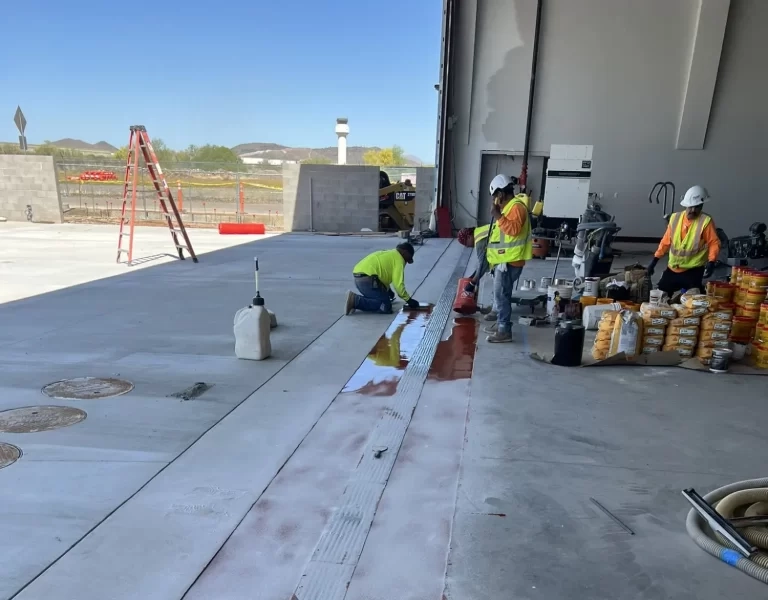
There is a specific kind of heartbreak that happens about six months after a "weekend warrior" decides to tackle a DIY epoxy floor. It starts as a small bubble near the garage door. Then, a patch of gray coating sticks to your tires after a quick run to the grocery store. Before you know it, that "showroom finish" looks like a bad peeling sunburn.
At Floor Kings, we spend a good chunk of our time stripping off failed DIY attempts and "budget" professional jobs. Epoxy flooring is an incredible investment, but it’s also a chemistry project. If you get the variables wrong, the floor fails.
If you’re planning on upgrading your Arizona garage or commercial space, here are the most common blunders we see—and exactly how you can avoid them.
1. Trusting the "Acid Wash" Myth
Most DIY kits you buy at big-box stores tell you to prep the concrete with muriatic acid. In theory, the acid etches the surface so the epoxy can stick. In reality? Acid washing is rarely enough, especially for older Arizona concrete that has seen decades of oil spills and salt.
How to avoid it: Professional adhesion requires a mechanical profile. We use industrial diamond grinders to literally shave off the top layer of concrete. This opens up the "pores" of the slab. If the concrete doesn't feel like 60-grit sandpaper before the coating goes down, the epoxy is just sitting on top, waiting to peel.
2. Ignoring the "Arizona Heat" Variable
Timing is everything. In Scottsdale or Phoenix, the ambient temperature can swing 30 degrees in a single day. Epoxy has a "pot life," which is the amount of time you have to apply the product before it hardens in the bucket. On a 105-degree day, that pot life can shrink from 30 minutes to 10 minutes.
How to avoid it: You have to monitor the slab temperature, not just the air. Professionals work in the early morning hours and use climate-specific resins. If you try to roll out epoxy in the heat of a July afternoon, it will "flash cure," leading to streaks, bubbles, and a weak bond.
3. Painting Over Oil and Grease
Concrete is like a giant sponge. Over the years, it soaks up engine oil, brake fluid, and specialized chemicals. If you just roll epoxy flooring over an oil stain, the oil will eventually migrate back to the surface and delaminate the coating.
How to avoid it: Spot cleaning with a degreaser isn't enough. You need to use professional-grade emulsifiers or, in extreme cases, torch the oil out of the concrete. We ensure the substrate is chemically neutral before the first drop of primer hits the floor.
4. Stretching the Material Too Thin
It’s the oldest trick in the book to save a buck. You see a kit that claims it "covers up to 500 square feet," so you try to push it across a massive two-car garage. Big mistake. When you roll epoxy too thin, you lose the "build." It won't self-level, you get ugly dry spots, and the floor offers basically zero protection against a dropped wrench.
How to avoid it: Don't play games with the spread rates. Industrial commercial epoxy flooring looks bulletproof because it actually has the thickness to swallow up minor concrete pits. If you’re tackling this solo, buy 20% more resin than the box says. You’ll thank yourself when you aren't scraping the bottom of the bucket halfway through the job.
5. Skipping the Moisture Test
We call this the "silent killer." Even in the desert, moisture vapor is constantly pushing up through your slab. If you trap that gas under a non-porous layer of epoxy, the pressure has nowhere to go but up. Eventually, it blows a bubble right through your finish.
How to avoid it: Grab a moisture meter or do a calcium chloride test. It’s cheap insurance. If your slab is "sweating," you need a specialized moisture vapor barrier primer. Skipping this step is how a $3,000 floor turns into a $3,000 peeling mess in six months.
6. The "Hot Tire" Trap
This is the classic DIY fail. You pull in after a long drive on the 101, and your tires are baking. Cheap acrylic "epoxy paints" can't handle that heat. As the tires cool, they literally fuse to the floor and rip the coating off the concrete when you back out the next morning.
How to avoid it: This is exactly why we swear by residential epoxy flooring topped with polyaspartic. Polyaspartic doesn't get soft when it gets hot. It stays flexible and won't bond to your rubber, even in the peak of an Arizona August.
Why "Done Right" Beats "Done Twice"
Look, an epoxy floor isn't just a paint job—it’s a chemistry-based resurfacing project. When these floors fail, you can’t just "patch" them. You have to rent a beast of a grinder, strip the old gunk off (it’s a dusty, miserable nightmare), and start over.
By the time you pay for the failed kits and the rental gear, you’ve usually spent way more than the pro quote you passed on in the first place.
The Floor Kings Difference
We’ve seen every disaster imaginable, and we built our service to fix them before they happen. Between our diamond-grinding prep and our UV-stable topcoats that survive the Scottsdale sun, we make sure your first floor is the only one you ever pay for.
Stop gambling on "weekend" floors that won't last the year. Whether it’s a home garage or a massive commercial shop, we’ve got you. Jump over to floorkings.com to check out our work or book a no-BS estimate. Let's get it done right.